
Lutz, FL
Office Address
info@calljunkguyz.com
Email Address
 Skip to content
 Office Address
Email Address
The first time I had to deal with an eviction cleanout, I thought it’d be like flipping a switch, one tenant out, quick cleanup, next one in.
I was wrong.
I showed up expecting to sweep, mop, and maybe haul out a few boxes. What I walked into looked more like a storage unit exploded. Torn bags of clothes. Broken furniture stacked in corners. Fast food containers from weeks ago. A mattress was shoved against the wall. The fridge was still full. The AC? Off.
The worst part? I didn’t know where to start or what I was legally allowed to do.
Could I throw everything away immediately? Did I have to store it? What if the tenant came back asking for their stuff? And how long before I could actually show the property to new renters?
No one prepares you for this part of being a landlord.
That moment taught me that an eviction cleanout isn’t just a cleaning job, it’s a legal process, a safety issue, and a time-sensitive race to protect your investment. And the longer you wait or guess your way through it, the more it costs you.
This guide walks through everything I’ve learned, from Florida laws to local disposal rules in Lutz, so you can avoid the chaos I went through and handle your next tenant cleanout with clarity and confidence.
If there’s one thing you don’t want to guess on, it’s what you can legally do with a tenant’s belongings after they’ve been evicted.
In Florida, the law is pretty clear: you can’t just toss everything the moment the keys are handed over.
According to Florida Statutes §83.62 and §83.67, landlords have a legal obligation to follow a specific process for abandoned property, even after a lawful eviction.
You must notify the tenant in writing that their belongings are available for retrieval.
The notice must:
Be sent to the tenant’s last known address
Include a description of the property left behind
Provide a pickup deadline (at least 10 days if personally delivered, or 15 days if mailed)
If the tenant doesn’t respond within that time, you’re legally allowed to:
Dispose of or sell the property (depending on its value)
Keep proceeds (after expenses) if the item is sold
You throw something out before the notice period ends
You damage, sell, or donate items without providing notice
You dispose of anything with perceived value (e.g., electronics, collectibles) prematurely
Even if it feels like trash to you, it may not be in the eyes of the law. That stained old mattress? Trash. But that guitar leaning in the corner? That’s a liability waiting to happen if you skip the notice.
Following this process not only keeps you compliant, it also protects you in case the tenant tries to dispute the eviction or claim you destroyed their property.
Next up, we’ll look at how to walk into a recently vacated property safely and what red flags to spot before you touch anything.
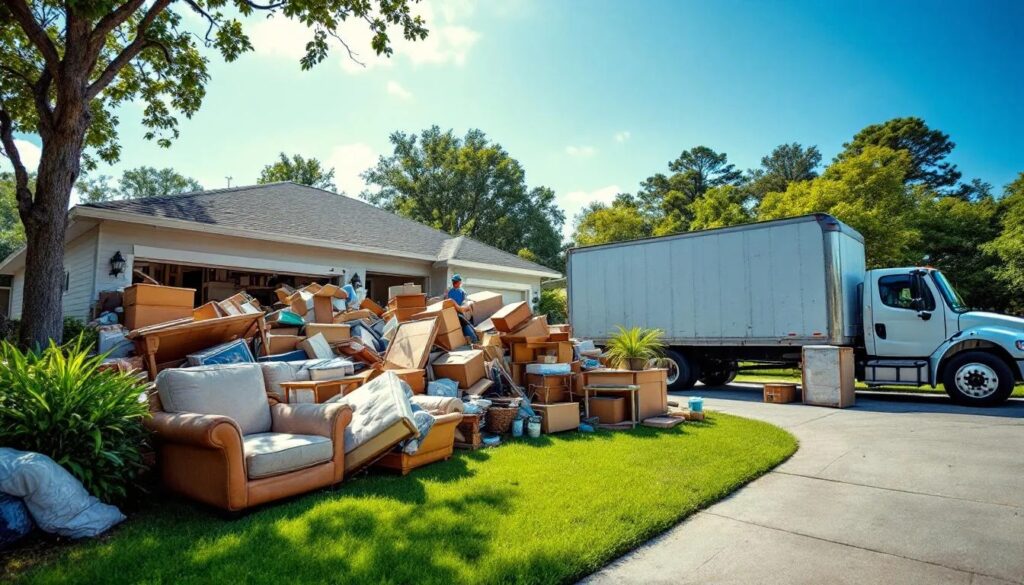
Before you even think about touching anything inside the unit, stop.
Eviction cleanouts aren’t just messy; they can be dangerous. I learned that the hard way when I opened a kitchen drawer in one of my units and found roaches, moldy takeout receipts, and a cracked syringe. No exaggeration.
That was the moment I realized: this isn’t just about junk. It’s about safety.
Odor: If it smells like ammonia, rot, or mildew, you’re likely dealing with mold, spoiled food, or worse
Signs of pests: Roaches, rodents, ants, or fleas hiding in furniture or around food
Biohazards: Leftover needles, cleaning chemicals, or pet waste
Standing water or mold: Especially in bathrooms, kitchens, or closets
Broken furniture or sharp debris: Easy to trip over or cut yourself on
Disposable gloves
Face mask or respirator (if mold is present)
Closed-toe boots
Flashlight
A large contractor bag — just in case something has to be contained immediately
Don’t start throwing things out
Don’t drag heavy furniture across floors
Don’t try to clean without documenting first (more on that soon)
Eviction cleanouts in Lutz can feel urgent, especially when you’re losing rental income every day the unit sits empty. But rushing in without protecting yourself (or the property) can create bigger issues.
Take an hour. Gear up. Document what you see. And make sure you’re safe before moving to step two.
Next, we’ll break down exactly how to document and sort everything, without getting overwhelmed.
Once it’s safe to enter the property, your next move isn’t hauling, it’s documenting.
Why? Because in Florida, you’re legally required to give tenants a window to reclaim their things. And in the real world, you need proof that you didn’t just toss someone’s TV or laptop into a dumpster.
The best way to protect yourself? Create a detailed, time-stamped record of what was left behind.
Snap wide shots of each room before moving anything
Get close-ups of valuable or unusual items
Don’t forget the fridge, drawers, closets, garage, and outdoor spaces
Use your phone’s timestamp feature or upload to the cloud immediately
This step takes 10–15 minutes, but it can save you from weeks of legal headaches if a former tenant comes knocking.
You don’t need to list every spoon, but it helps to jot down:
| Room | Notable Items Left Behind | Condition | Value (Est.) |
|---|---|---|---|
| Bedroom | Queen mattress, mirror, dresser | Fair | ~$150 |
| Living Room | Couch, broken TV, pet bed | Poor | ~$50 |
| Kitchen | Pots, toaster oven, cleaning supplies | Usable | ~$75 |
You can use a simple Google Sheet or handwritten checklist, just make it clear and date it.
Hold: Anything of potential value (electronics, IDs, personal records)
Donate: Usable but not high-value (clothes, dishes, lamps)
Trash: Broken, damaged, infested, or perishable items
Hazardous: Paint, chemicals, biohazards, batteries (need special disposal)
Don’t actually dispose of the “Hold” pile until the notice period is up. Just label it and store it securely if required.
This documentation step builds your legal defense, speeds up cleanup, and helps you know exactly what kind of removal help (if any) you’ll need later.
Next, we’ll walk through the tenant notification process, even if they’ve vanished.
Even after a legal eviction, you still have to formally notify the tenant about the items they left behind, especially if anything has value.
And yes, even if they ghosted you. Even if the place looks like a landfill. Even if the items are mostly junk.
Why? Because Florida law requires it.
Write a notice that includes:
A brief list or general description of what was left
Where and how can they claim their property
The deadline to claim it:
10 days if you hand-deliver
15 days if mailed
Send it to their last known address
If that’s your rental unit, send a copy to any alternative address you have job, email, or emergency contact
Optional but smart:
Send it certified mail with delivery confirmation
Keep a copy of the notice and the proof of mailing for your records
Dear [Tenant Name],
This notice is to inform you that personal property was left behind at [Rental Address] following your tenancy.
The following items were found: [brief list or general description].
You have until [Date – 10 or 15 days from now] to claim your belongings by contacting [Your Name] at [Phone/Email].
After this date, the items will be disposed of in accordance with Florida law.
You might never hear from the tenant again. But if you skip this step and they later claim you threw away valuable items, you could be on the hook, even if the eviction was legal.
You don’t have to store junk forever, but you do need to play by the book.
Once that deadline passes, you’re finally cleared to begin the actual cleanout.
Once the legal notice period has passed, and assuming the tenant hasn’t contacted you, you’re in the clear to finish the cleanout.
But it’s not just “grab a trash bag and go.” Knowing what you can toss, what needs special handling, and how to legally dispose of it in Lutz is key.
Obvious trash (broken items, food, stained mattresses)
Expired cleaning supplies or toiletries
Moldy, infested, or water-damaged furniture
Torn clothes, ripped bedding, old newspapers, etc.
Just document everything first; once it’s in the dumpster, there’s no going back.
Gently used furniture
Pots, pans, and kitchen tools
Small appliances in working condition
Clean clothing, blankets, or books
Be realistic, if something sat in a humid Florida apartment for weeks, donation centers in Lutz may not accept it. Check with Goodwill, Habitat ReStore, or a local church before you load up.
Paint, motor oil, and chemicals
Electronics (TVs, computers, monitors)
Tires, batteries, and fluorescent lightbulbs
Biohazards or sharp medical waste
For these, check with Hillsborough County Solid Waste Services or visit:
👉 https://hcfl.gov/trash-and-recycling
If you’ve got multiple rooms packed with junk or heavy furniture you can’t move safely, this is where professional eviction cleanout services make sense.
Local providers know:
What the county accepts
What needs special disposal
How to clear it out fast without damaging the unit
If you need help figuring out what’s recyclable, salvageable, or flat-out junk, the Junk Removal Services in Lutz page has a breakdown of options and rules, no pressure, just info.
Next up: what Lutz will and won’t let you set on the curb, and how to avoid fines.
Once you’ve sorted the mess, you’ll probably want to drag as much as possible to the curb. I get it, I tried the same thing.
But Lutz (like the rest of Hillsborough County) doesn’t offer unlimited bulk pickup. If you don’t follow the rules, your pile might sit there for days — or worse, you could be fined.
You get 2 free bulk pickups per year as a residential customer
You must schedule pickup in advance
Call (813) 272-5680 or request online
Items must be curbside by 6 a.m. on pickup day
They won’t accept oversized or soaked items (like waterlogged mattresses)
E-waste (TVs, monitors, computers)
Paint cans, cleaners, batteries
Mattresses with visible mold or damage
Construction debris (tile, cabinets, drywall)
Furniture mixed with trash or not staged correctly
Standard couches, chairs, and tables
Mattresses (dry and wrapped in plastic if possible)
Box springs, dressers, bed frames
Bags of clothing or boxed-up household items
Location: 8001 W Linebaugh Ave, Tampa, FL 33625
Open: Mon–Sat, 7:30 AM–5 PM
Bring a driver’s license + proof of residency. You’ll need to unload everything yourself.
If the furniture is too damaged or heavy, or you’ve missed the free pickups, it’s often cheaper and faster to use a local junk hauler than to rent a truck or make multiple trips.
We’ll wrap things up with your last step, the final walkthrough and prep before re-listing your rental.
Under Florida law (Fla. Stat. §83.67), landlords must notify the tenant in writing and give them at least 10–15 days to reclaim their property. If the tenant does not respond, the landlord may legally dispose of or sell the items.
You must wait at least 10 days if the notice is delivered personally, or 15 days if mailed. After that, you’re free to dispose of unclaimed items.
Yes, perishable, soiled, or clearly unsafe items (like broken furniture or spoiled food) can be disposed of right away. Still, document everything with photos just in case.
If the legal notice period ends with no response, you may legally dispose of or sell the abandoned items. Be sure to document the timeline and condition of everything.
Only if you schedule a bulky item pickup with Hillsborough County. You’re allowed 2 free pickups per year. Items must meet county guidelines, oversized, wet, or electronic items may not be accepted.


 Optimized by Seraphinite Accelerator